


Reishi mushrooms: scientifically proven health benefits for the immune system and sleep
Reishi mushrooms are known as the ‘mushroom of immortality’ in traditional Chinese medicine, where they have been used for over two thousand years as a means of maintaining health and prolonging life. Whilst it was long the preserve of royalty and the elite in Asia, recent scientific research is now providing mounting evidence that this mushroom does indeed contain rare biochemical compounds that act simultaneously on the immune system, the nervous system and the stress response.
In this article, we review the chemical composition of Reishi mushrooms, the latest findings from clinical studies and systematic reviews regarding their health benefits, along with dosage guidelines and advice on safe use.
What is the Reishi mushroom and what makes it unique?
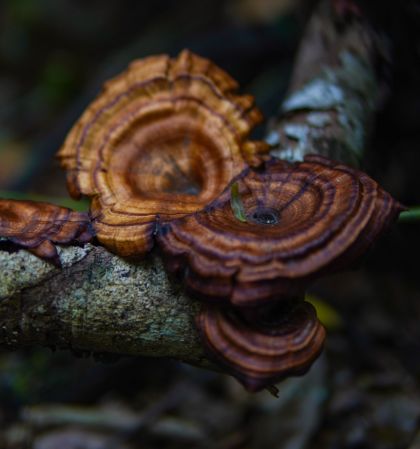
The Reishi mushroom is a medicinal mushroom characterised by its distinctive glossy reddish-brown colour and its hard, wood-like surface. It is known by various names: ‘Lingzhi’ in Chinese and ‘Yongji’ in Korean. It grows naturally on decaying tree trunks in the warm, humid environments of Asia and is now widely cultivated commercially. Reishi mushroom is listed in the Chinese Pharmacopoeia as an approved medicinal herb, and the European Food Safety Authority has recognised its immune-supporting effects. The biological activity of Reishi centres on two main groups of compounds:
- β-Glucans: the most extensively studied immunomodulatory polysaccharides in the fungal kingdom, which directly stimulate immune cells by binding to specific receptors on the cell surface.
- Triterpenoids — Ganoderic acid: rare compounds found exclusively in the Ganoderma genus, which possess anti-inflammatory, antioxidant and immunomodulatory properties. A systematic review published in PMC in 2026 documented that these triterpenoids reduce inflammatory markers such as TNF-α, IL-1β and IL-6 by inhibiting the MAPK and TLR-4/NF-κB pathways in multiple models.
- In addition to these two compounds, reishi contains protein-bound polysaccharides, amino acids, ganoderol and a number of plant sterols.
Health benefits supported by scientific research
1. Boosting immunity and modulating immune responses
Reishi’s immunomodulatory effects are among its most extensively studied properties in the scientific literature. A meta-analysis and systematic review concluded that taking Reishi mushrooms in doses ranging from 200 to 11,200 mg daily for a period of one week to 24 weeks affects multiple health indicators in various groups. With regard to cellular immunity in particular, a clinical study demonstrated that beta-glucan extracted from Reishi mushrooms significantly increased the total number of lymphocytes (CD3+, CD4+, CD8+) and natural killer (NK) cells in children’s blood, confirming the safety and good tolerability of the intervention.
Similarly, a study published in 2024 documented that taking a dry extract of reishi mushrooms for eight weeks modulated T-cell function in older women, suggesting its role in combating age-related immune decline.
2. Improving sleep quality
Reishi mushrooms influence sleep through two complementary mechanisms: regulating the stress response via the HPA (hypothalamic-pituitary-adrenal) axis and reducing cortisol levels, as well as by acting on GABA receptors in the brain, which promote relaxation and deep sleep. A systematic review in 2023 concluded that Reishi mushrooms statistically significantly improve sleep quality in patients with primary insomnia.
3. Reducing stress and fatigue
Reishi mushrooms are classified as adaptogens, which are plants and fungi that help the body adapt to physical and psychological stress. A clinical study demonstrated improvements in stress indicators and fitness measures compared with the control group among participants who took reishi mushroom extract. A randomised clinical trial observed improvements in mood, sleep quality and salivary cortisol levels in those who took a mixture containing Reishi compared with the placebo group.
4. Combating chronic inflammation and cellular ageing
Chronic low-grade inflammation is one of the key drivers of cellular ageing. A systematic review demonstrated that triterpenoids extracted from Reishi mushrooms reduce key inflammatory markers by inhibiting the NF-κB pathway, highlighting their role in combating age-related inflammation.
5. Supporting Metabolic Health
The systematic review noted that multiple animal models have shown that Reishi mushrooms improve markers of hyperlipidaemia, diabetes and obesity, with preliminary clinical evidence in humans suggesting that further, larger-scale studies are warranted.
Reishi Mushroom and Marnys® KSA Propolis
Marnys® Propol contains shiitake mushrooms as part of its comprehensive immune-supporting formula, which combines propolis, royal jelly and colostrum. Medicinal mushrooms such as Reishi and Shiitake share a common immune-modulating mechanism based on beta-glucans, making multi-mushroom formulations more comprehensive in supporting the immune response.
Frequently Asked Questions
Is Reishi mushroom safe for long-term daily use? Available clinical studies have indicated that it is safe to use at the recommended doses for up to 24 weeks; however, long-term data remain limited and medical supervision is required.
Can Reishi mushroom be combined with propolis and royal jelly? Yes, this combination is biologically logical and is available in Marnez’s Propol product; each ingredient acts on different yet complementary immune pathways.
Is Reishi mushroom beneficial for healthy people or only for those with an illness? The GRADE review (2025) included both healthy individuals and patients, and observed benefits in both groups, albeit of varying magnitude.
How long does it take for reishi to have an effect on sleep? Most studies reported a noticeable improvement in sleep after 4–6 weeks of regular use.
Is there a difference between whole reishi powder and reishi extract? Yes, the standardised extract provides a higher concentration of active compounds (beta-glucans and triterpenoids) compared with whole reishi powder, which was used in most clinical studies.
Summary
For two thousand years, the Reishi mushroom has combined Asian medical heritage with a philosophical perspective on prolonging a healthy life. Today, modern scientific research is providing growing evidence to support what ancient Chinese physicians already knew: that this mushroom contains rare bioactive compounds which influence immunity, sleep, inflammation and stress via documented cellular pathways. Perhaps what sets it apart from other supplements is this rare combination of relative safety and multifunctionality within a single biological system.


